Click here to see error details.
Sunset Valley Oregon System
Layout Description
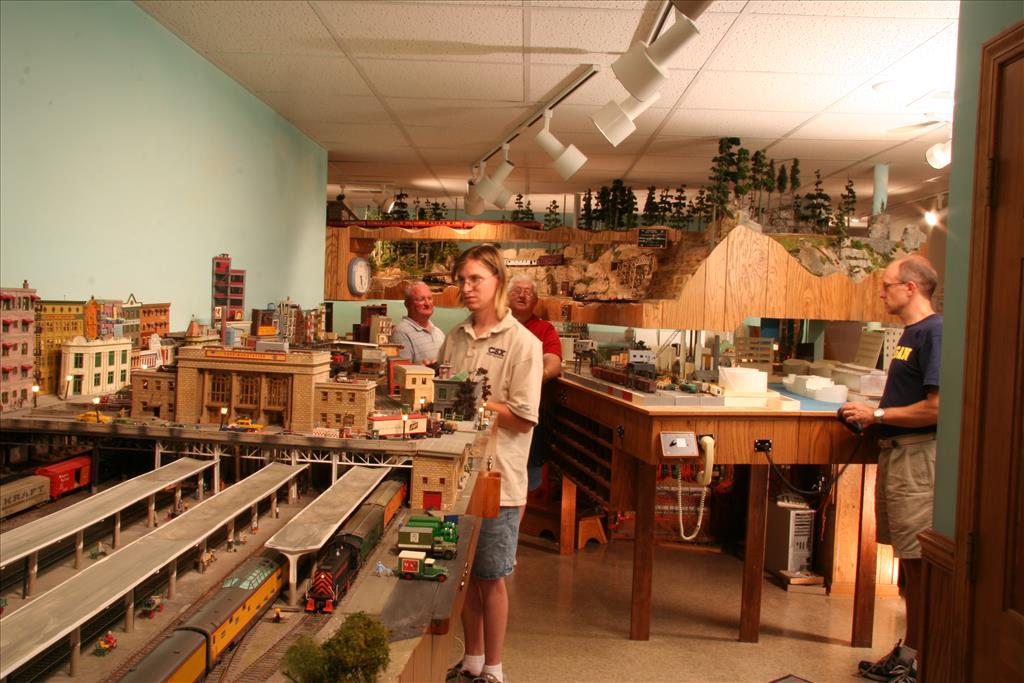
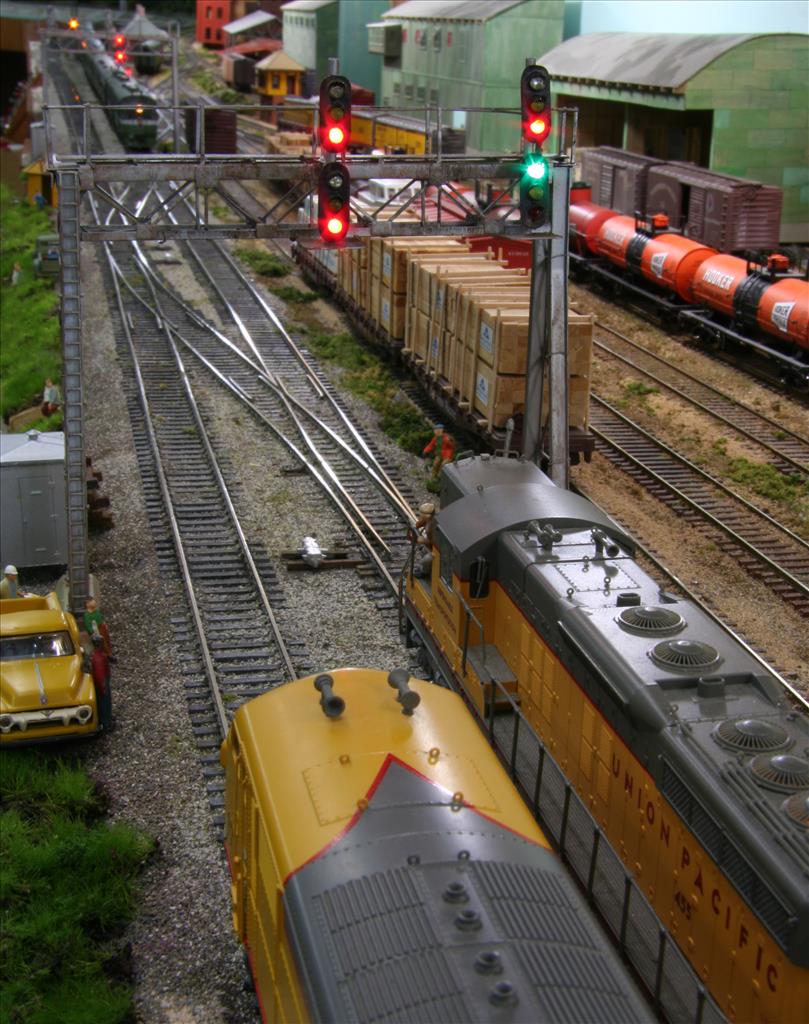
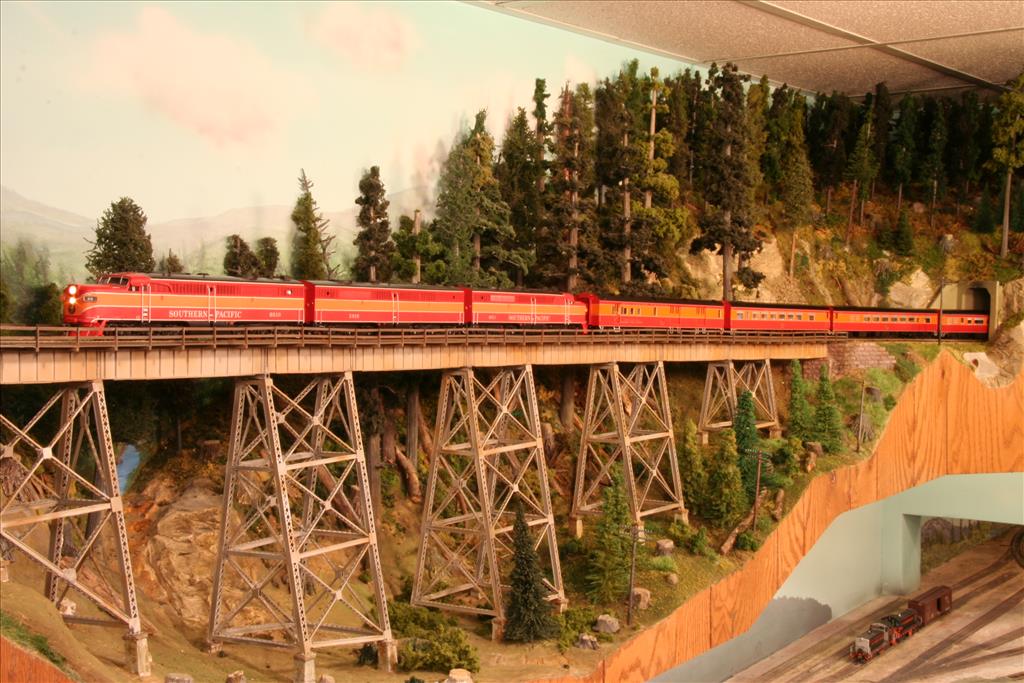
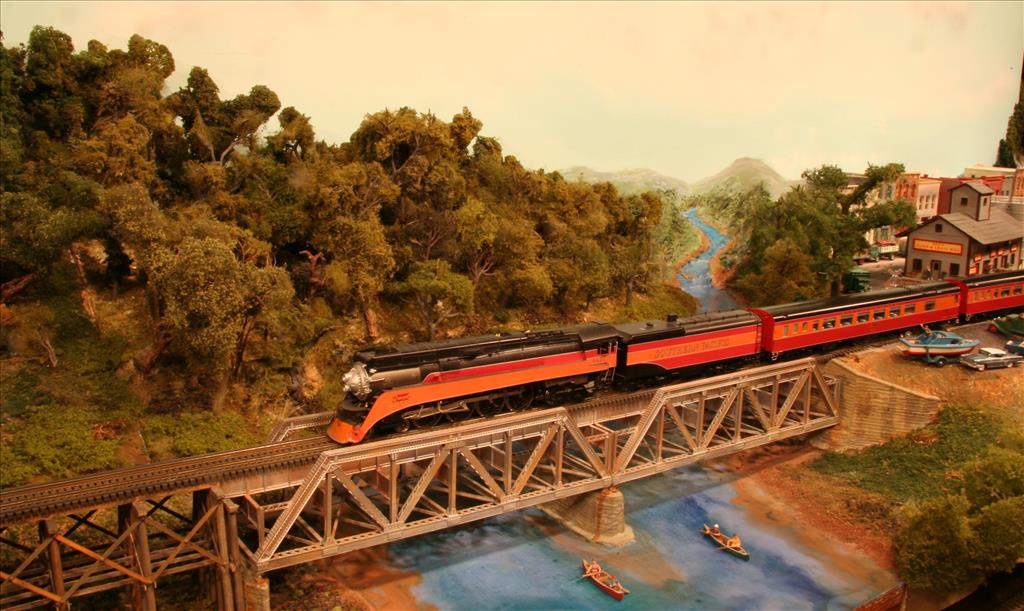
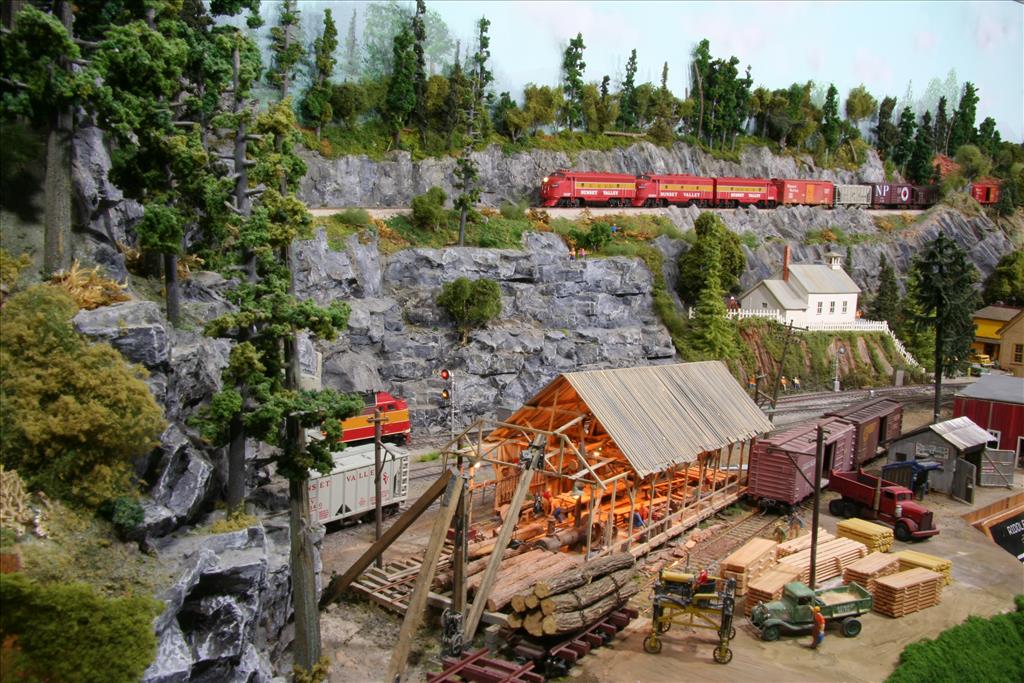
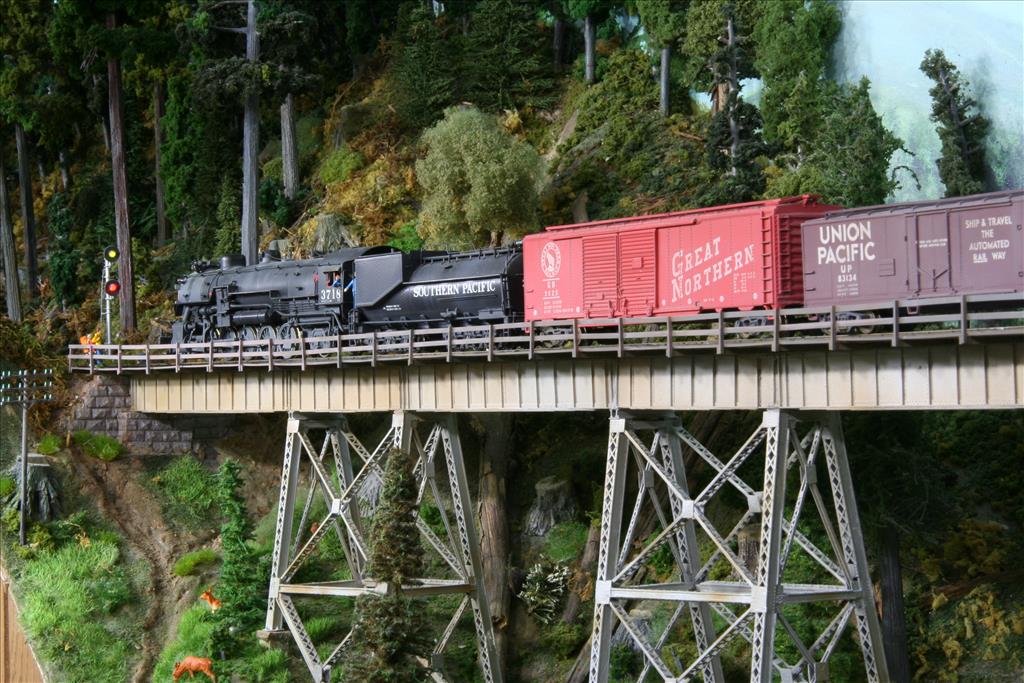
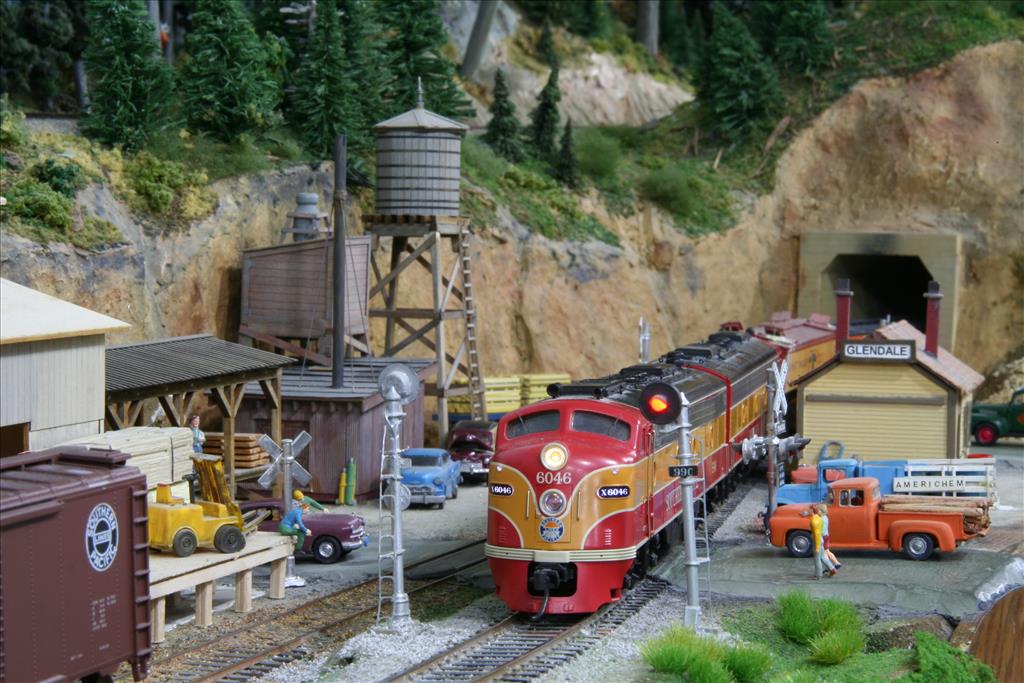
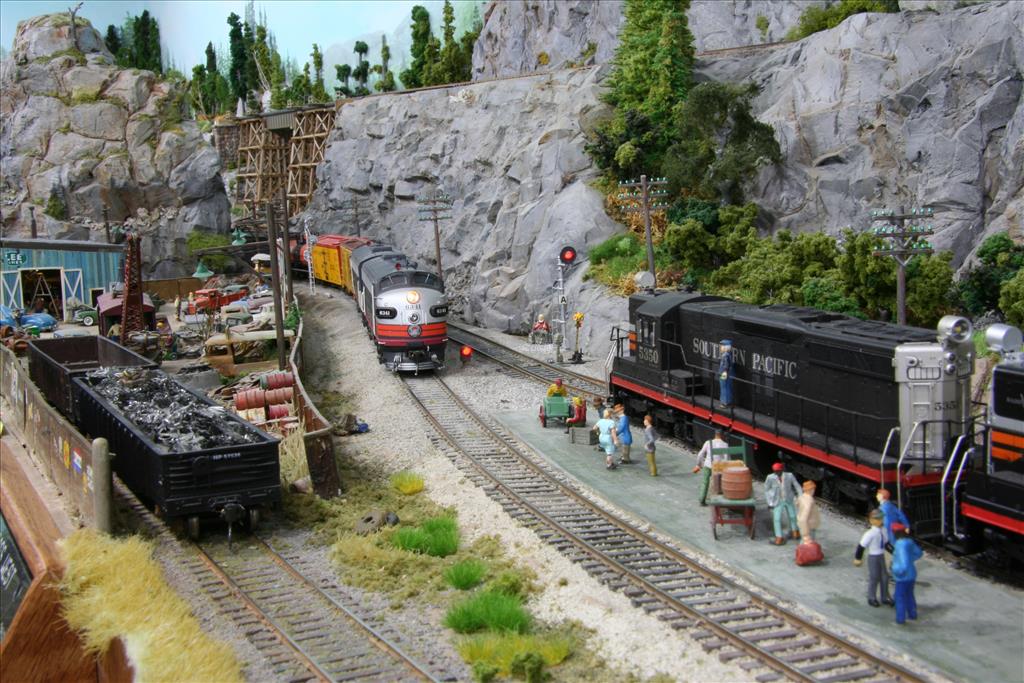
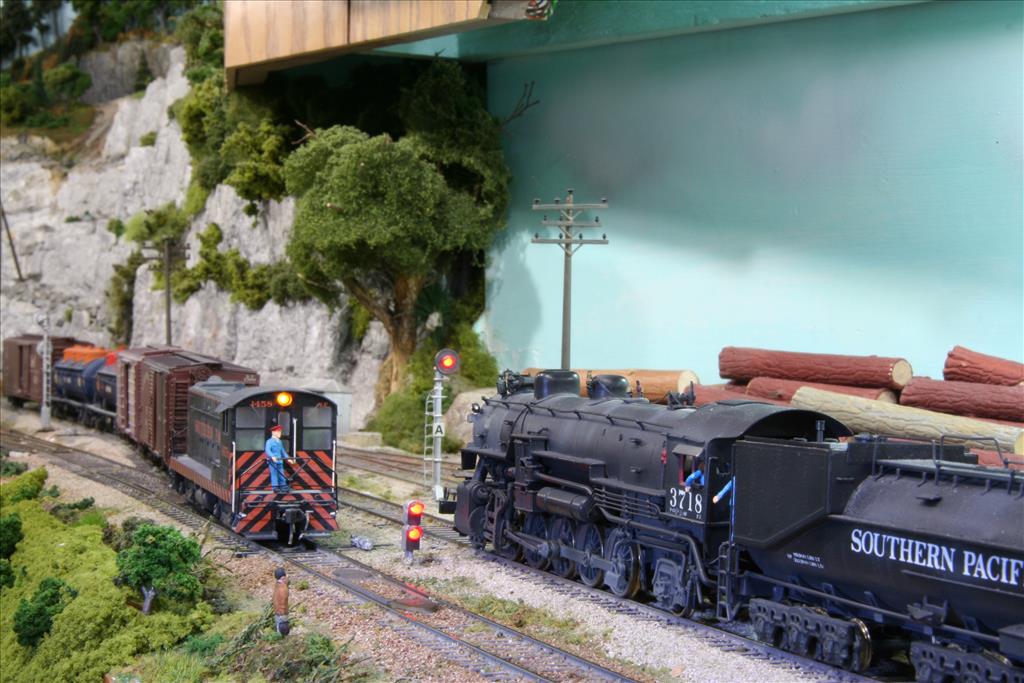
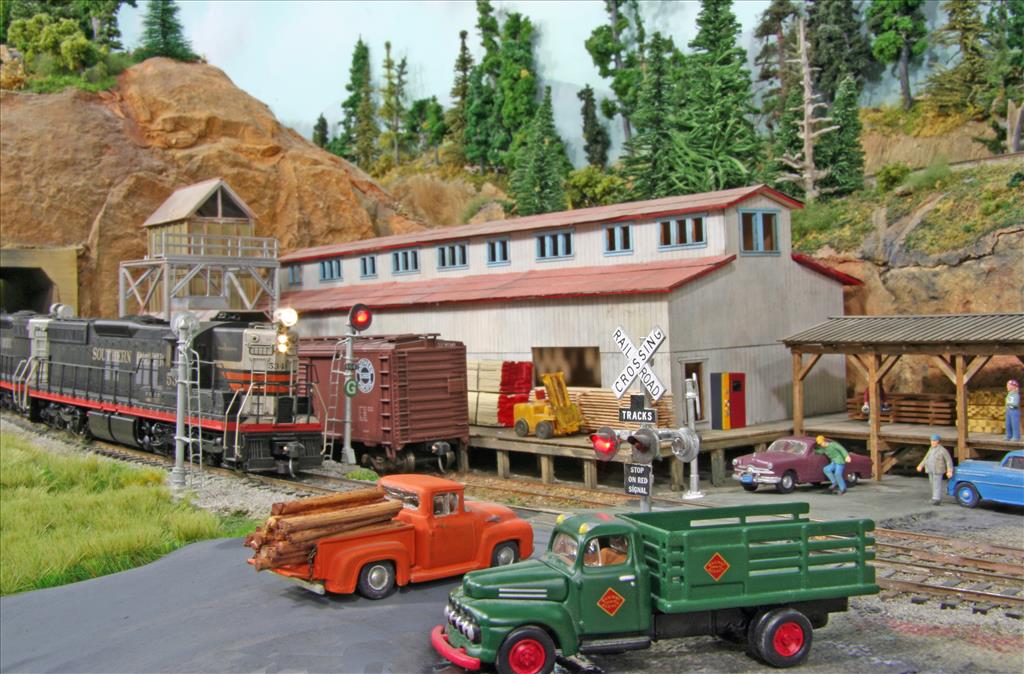
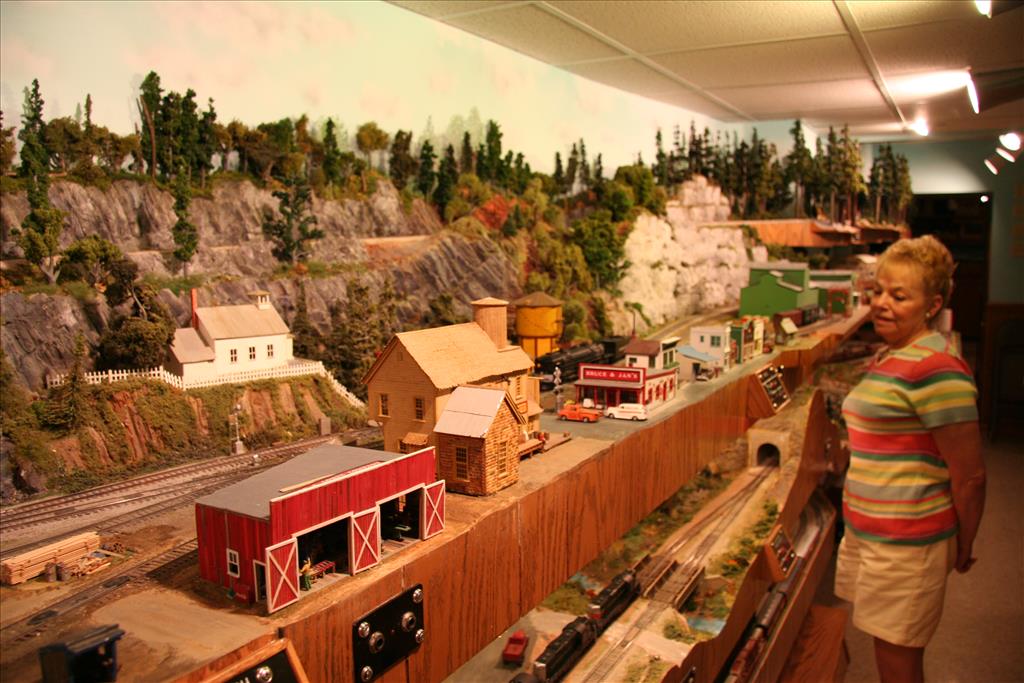
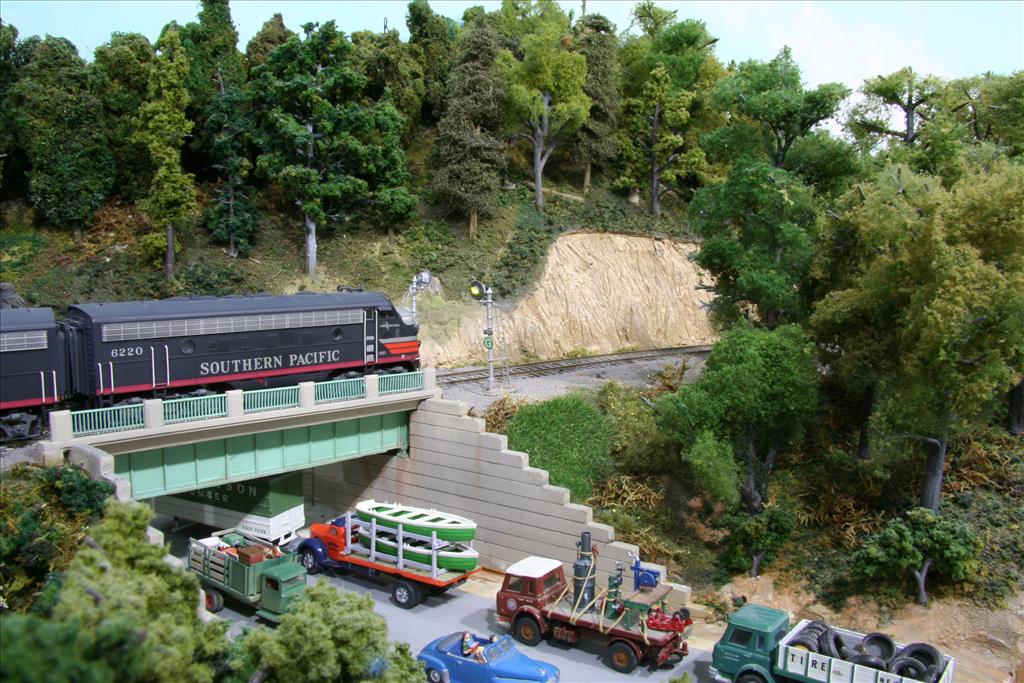
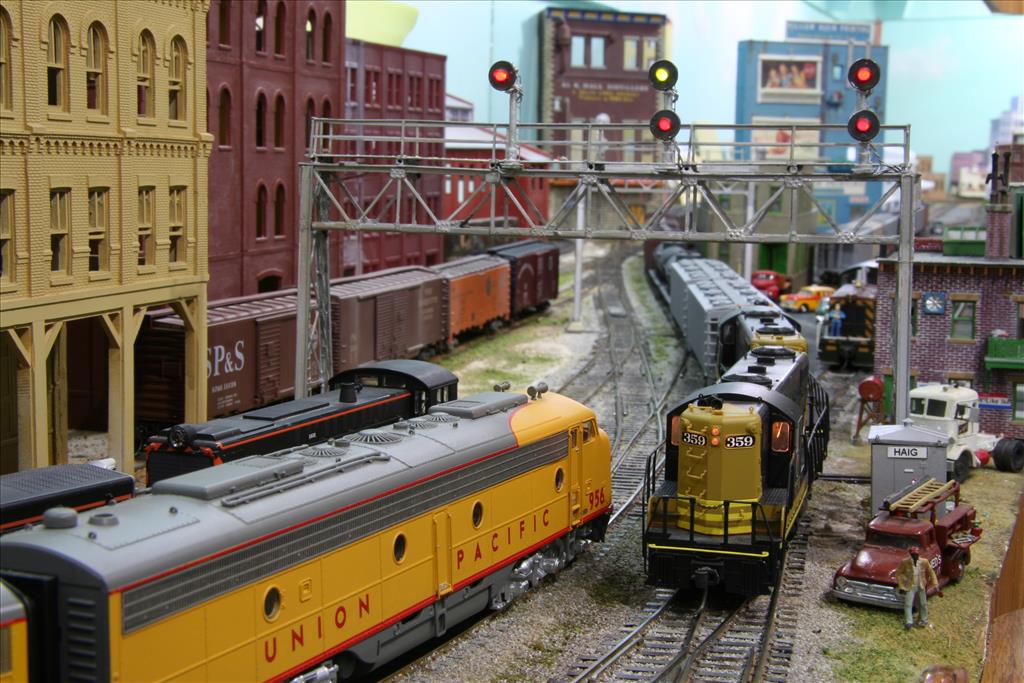
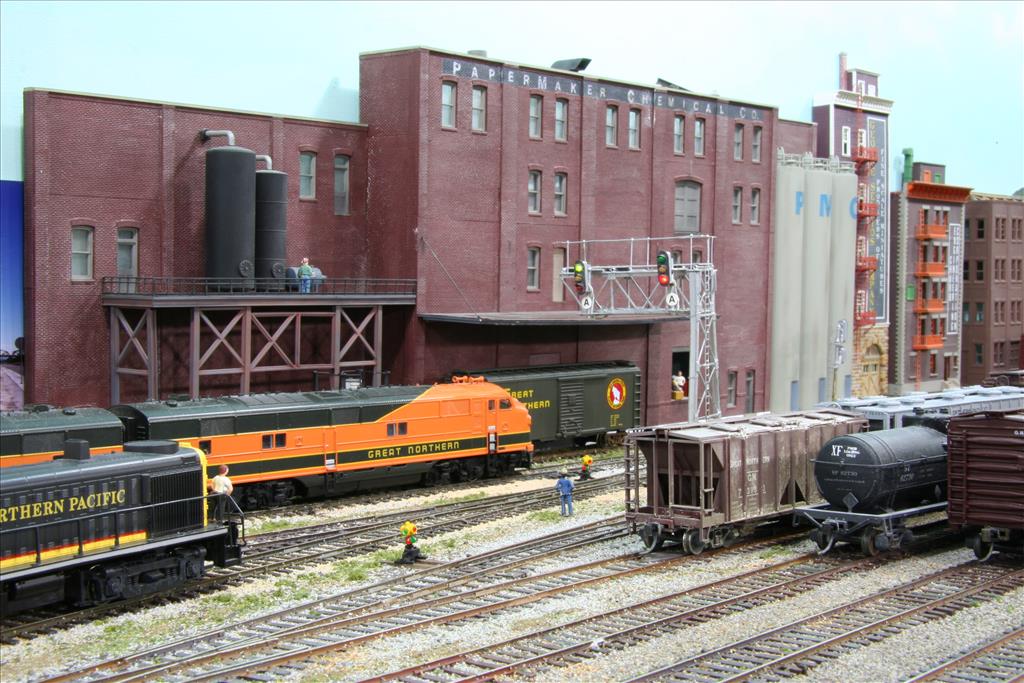
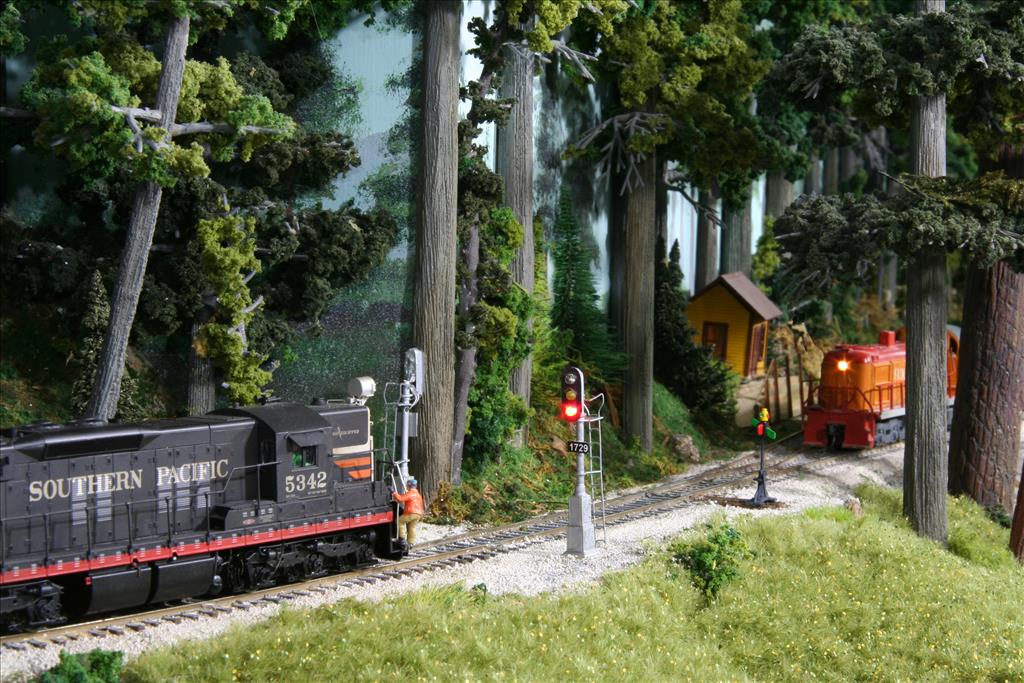
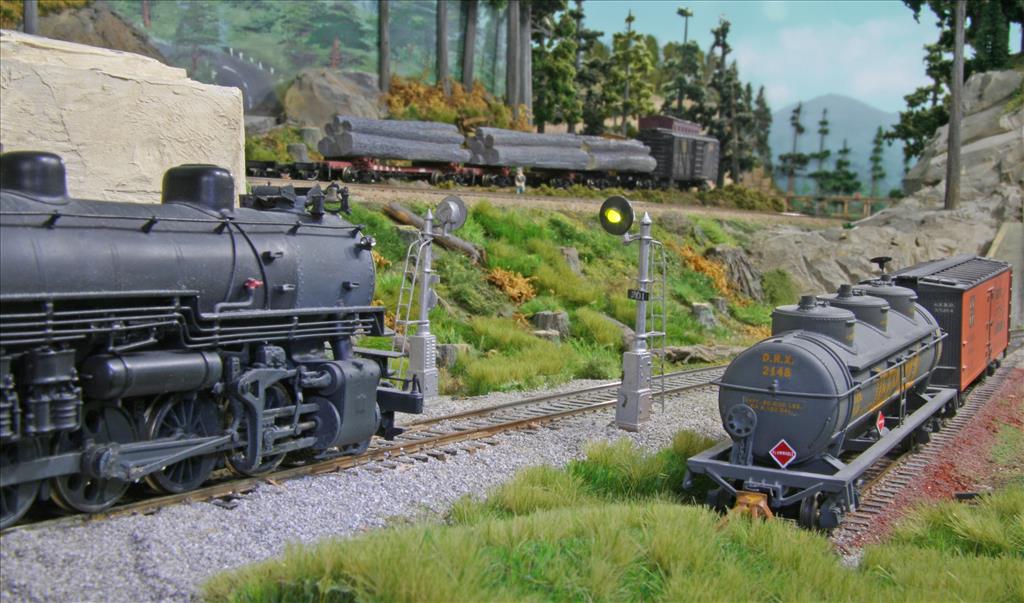
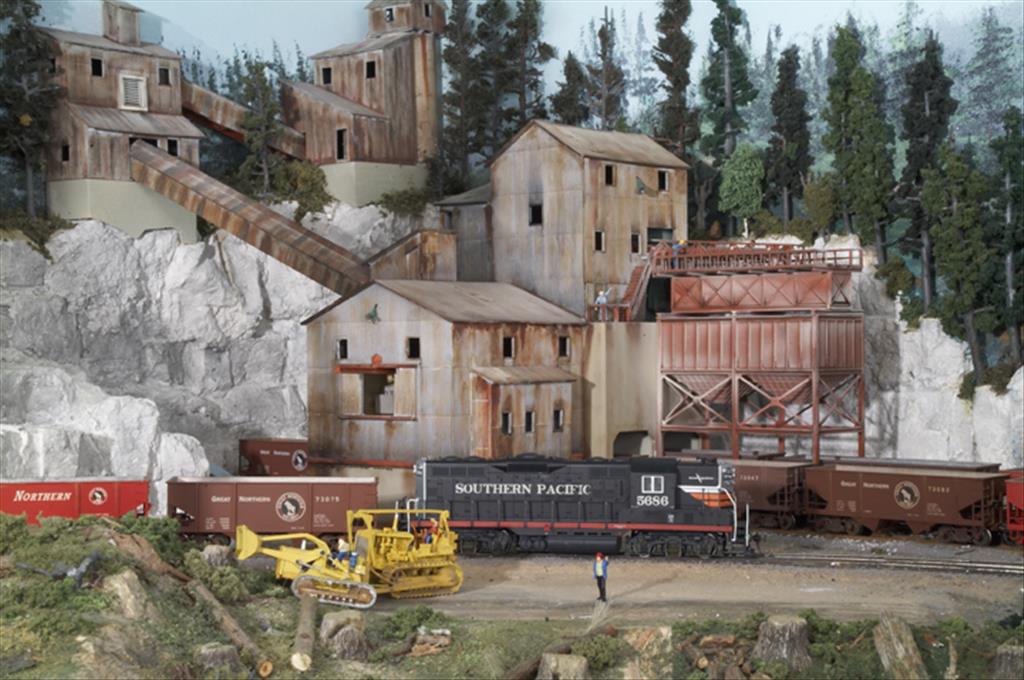
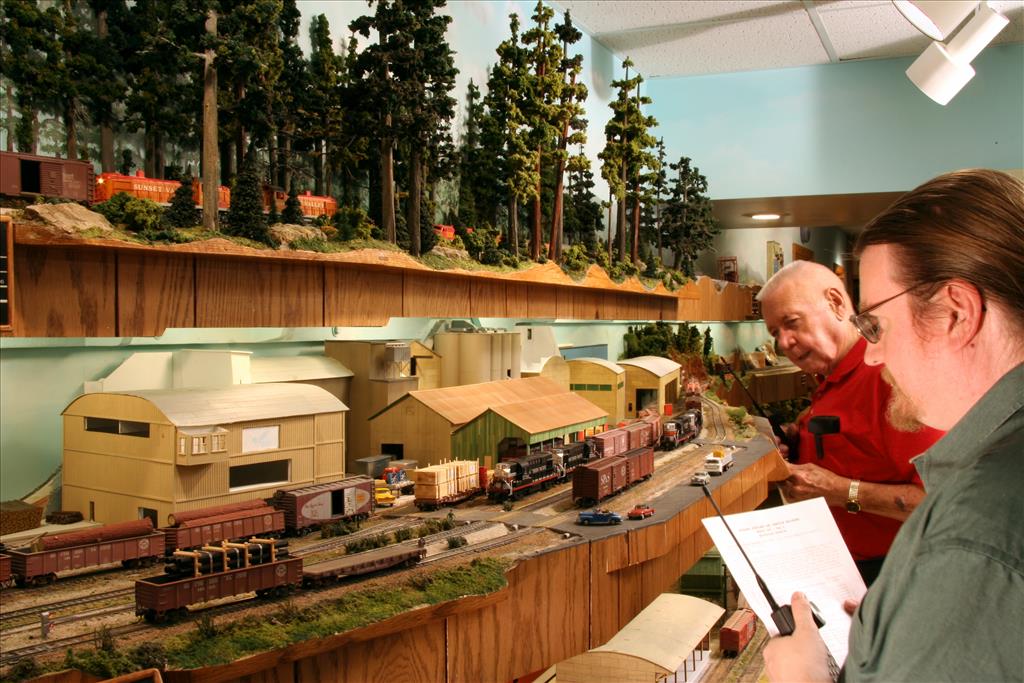
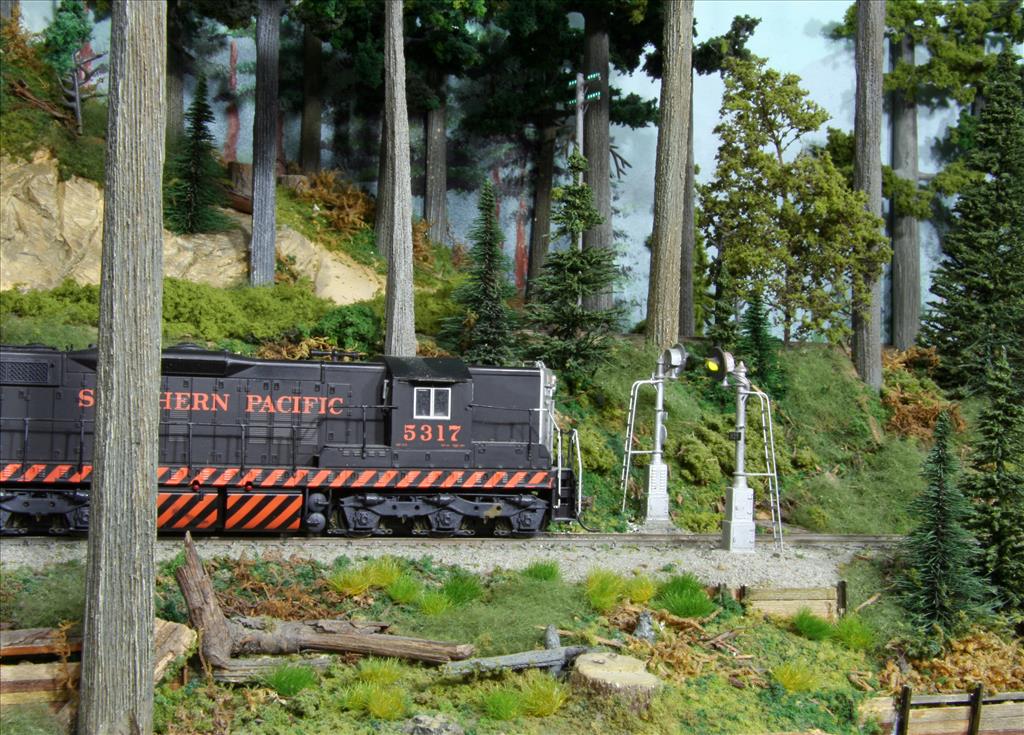
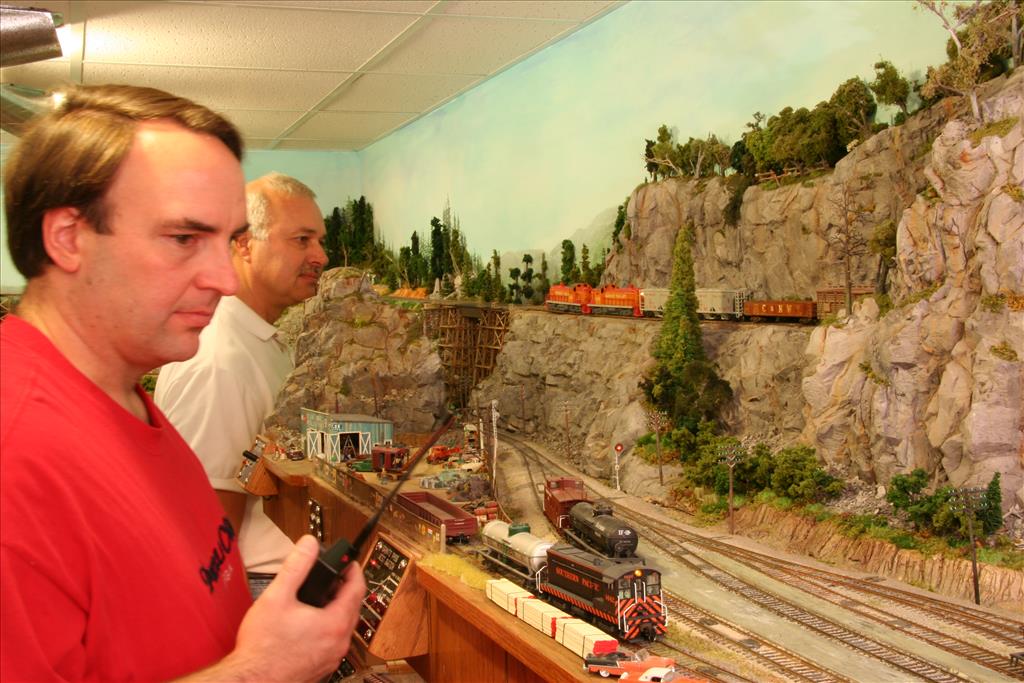
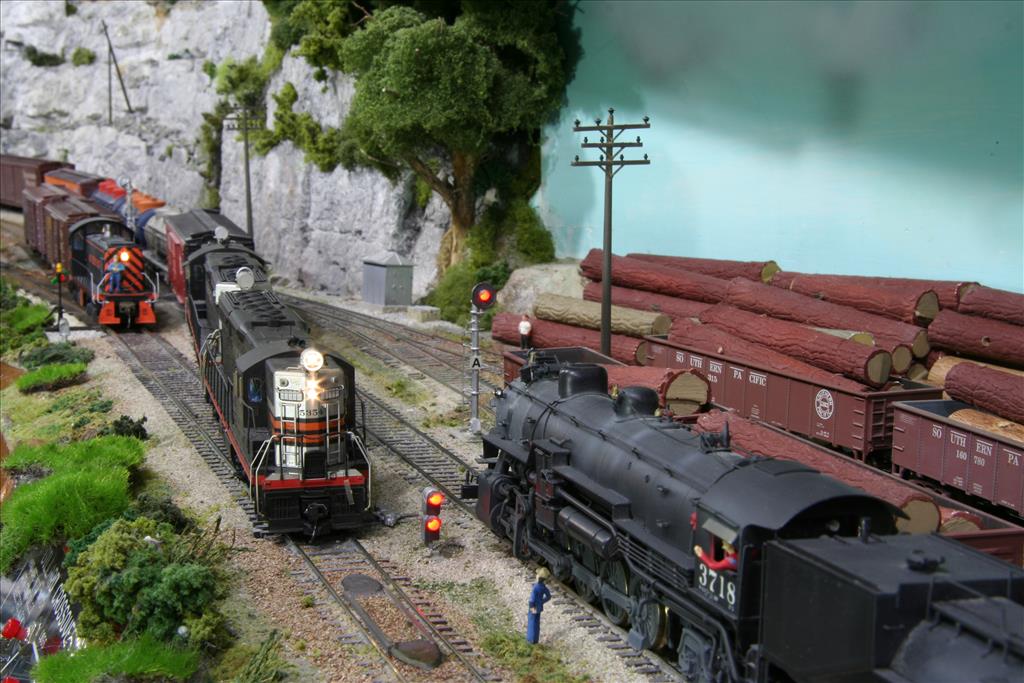
The SVOS features ten prototype railroads operating in the Pacific Northwest in 1955. Major focus is on the Southern Pacific from Portland, Oregon to Dunsmuir, California using the original SP Siskiyou line, and the SP Coos Bay Branch stretching out to the Pacific Ocean from Eugene, Oregon. Also included is Spokane Portland and Seattle (SP&S) trackage running somewhat parallel to the SP connecting Portland to Eugene. Independent railroad logging and mining operations are modeled along with the Great Northern (GN), Northern Pacific (NP), and Union Pacific (UP) operations into and within Portland.
Providing additional interest, the Crescent City Branch is modeled from near Oregon’s Grants Pass to California’s ocean port of Crescent City. This branch incorporates trackage originally built by the bankrupted California and Oregon Coast RR and subsequently purchased by the modeled Sunset Valley that completed the route to Crescent City.
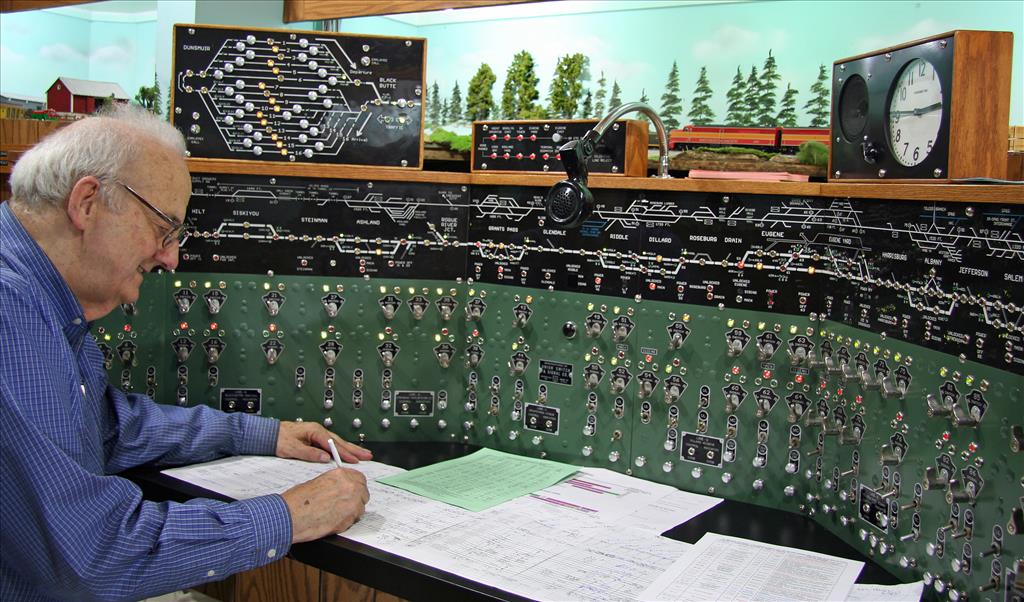
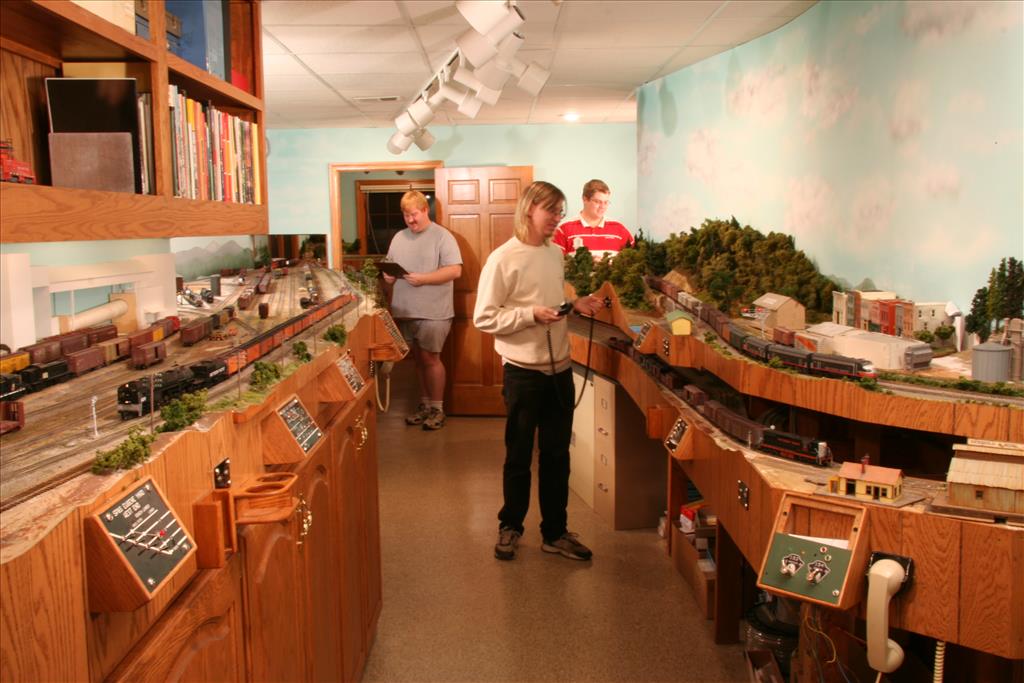
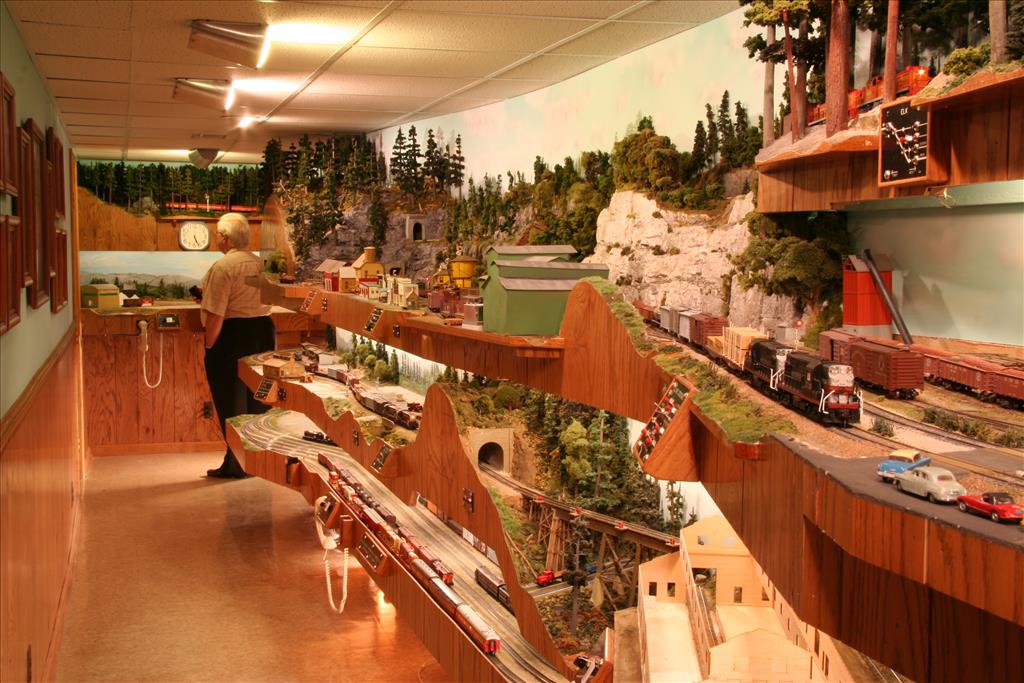
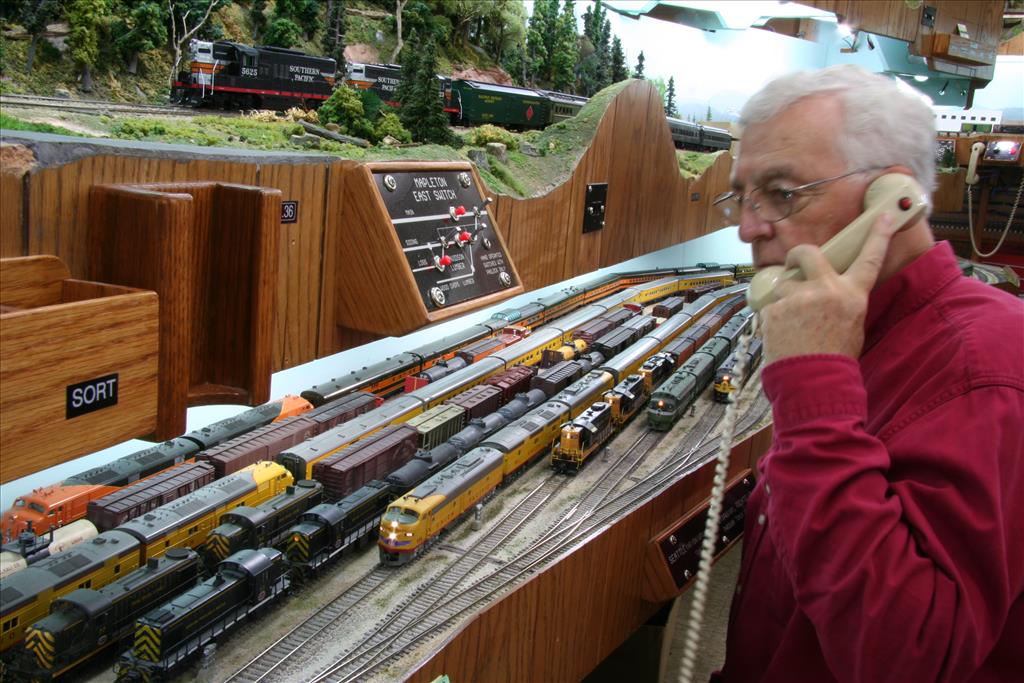
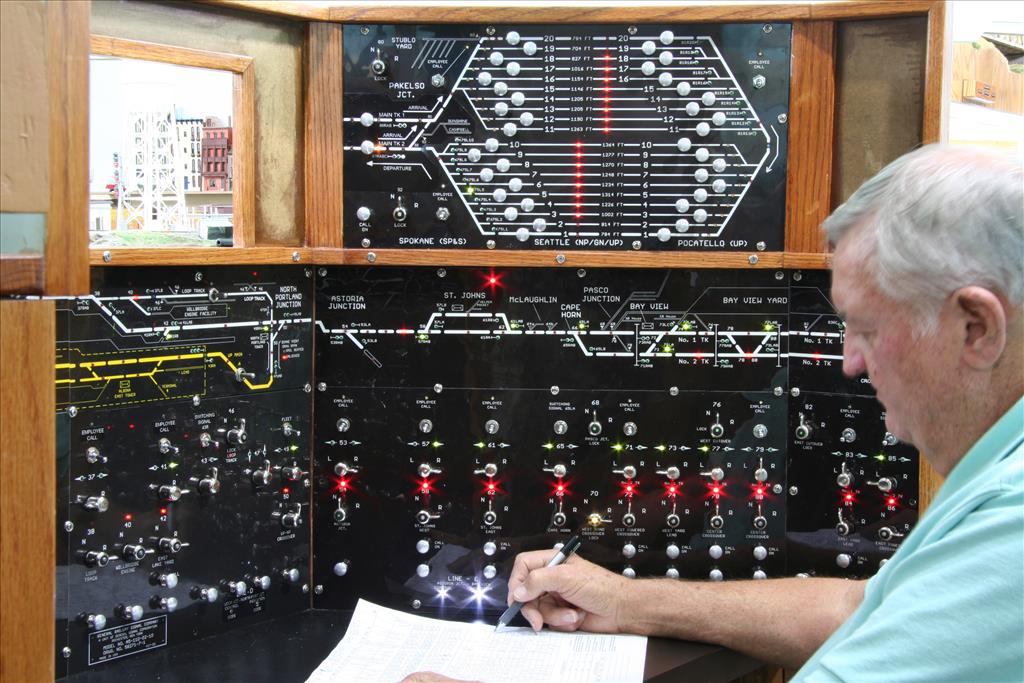
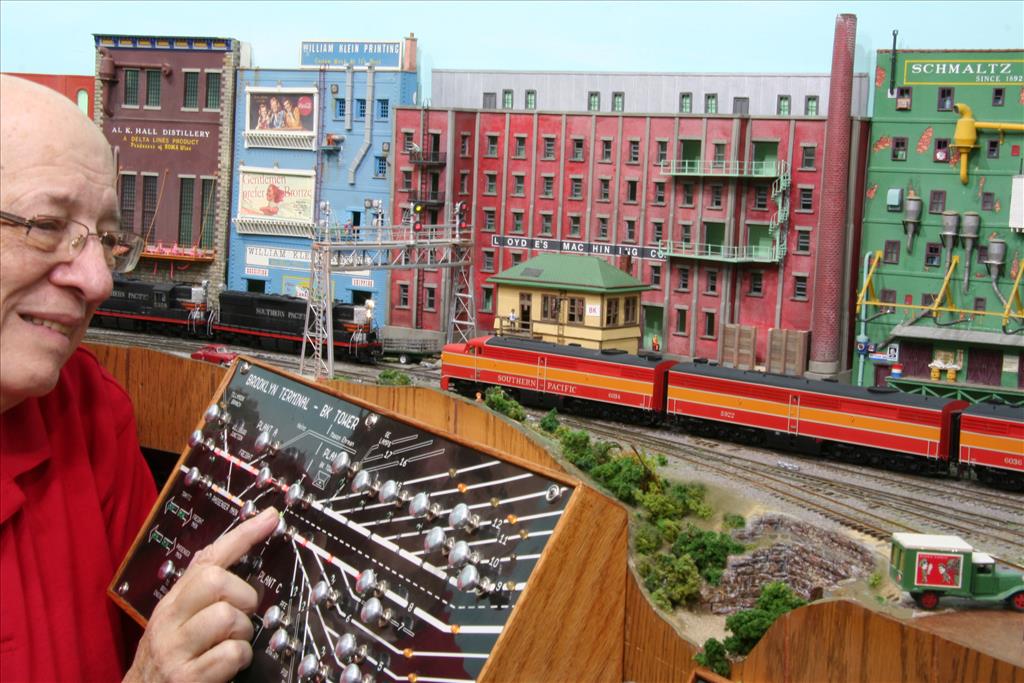
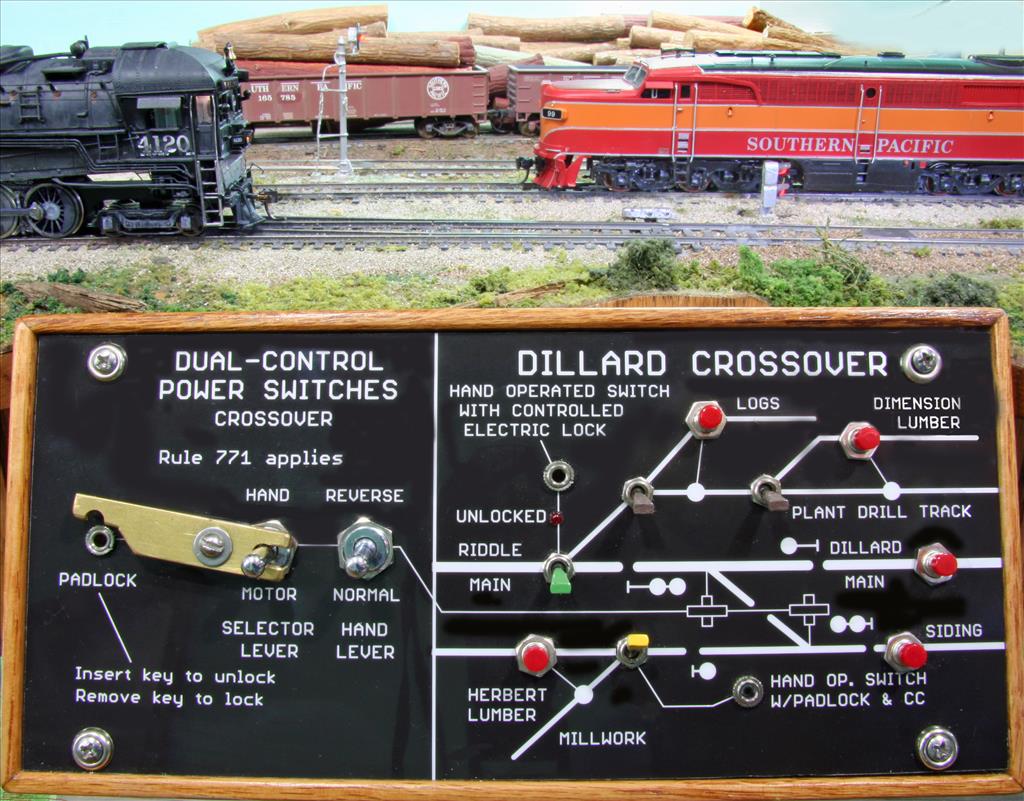
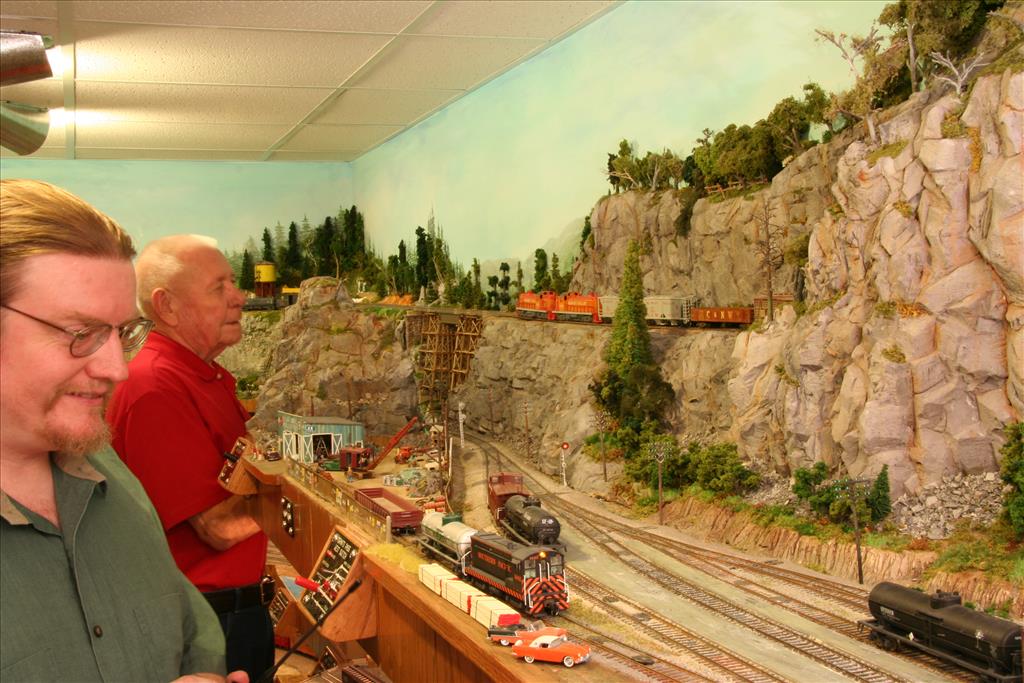
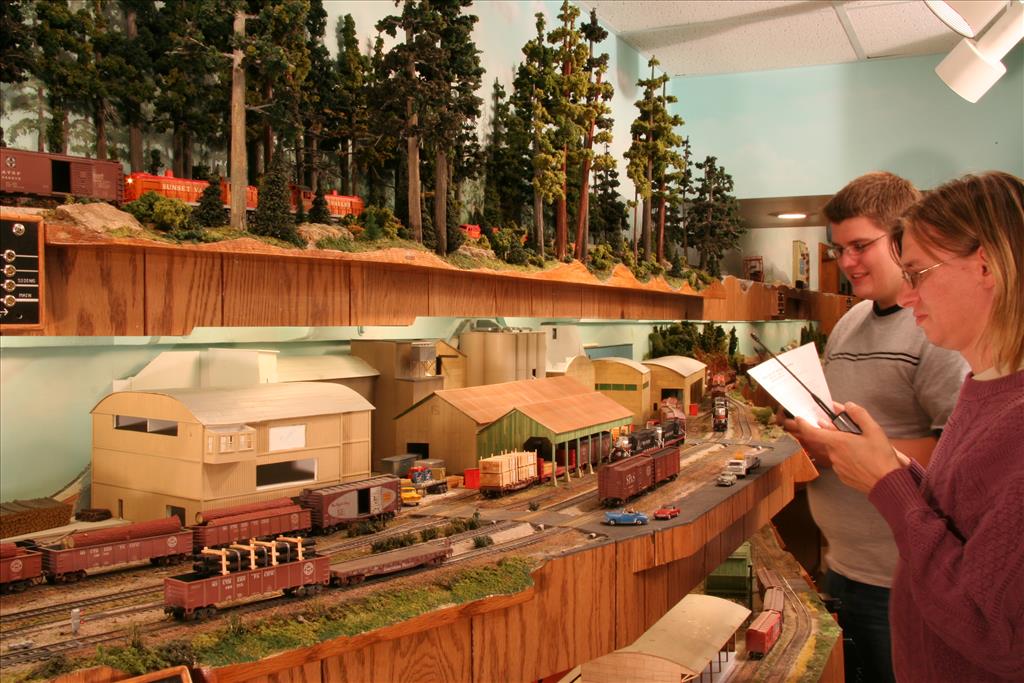
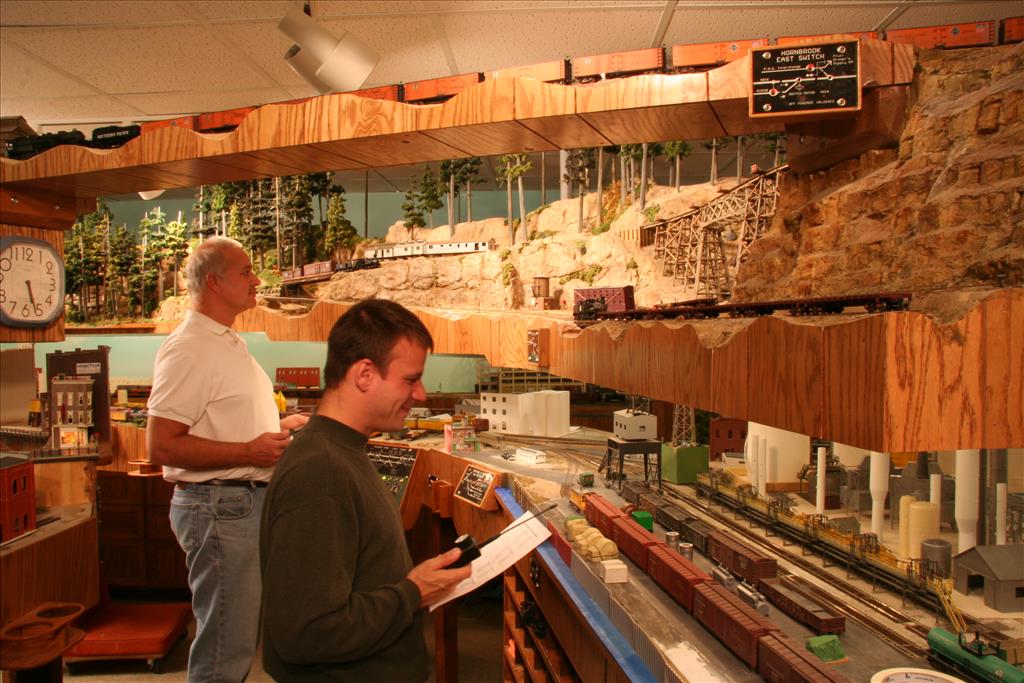
Incorporating all the different railroads being modeled, there is 1,400 ft of route trackage (approaching the length of five football fields), consuming up to 4-decks ranging from knee-high to over your head, all in a 2,650 sq ft basement. This includes space under a 2.5 car garage, a 3-season porch and through the basement bathroom. There are six classification yards, two separate CTC dispatching panels and three Entrance-Exit (NX) Interlocking Plants. A combination of through freights, plus locals and turns, travel through 45 cities and towns serving more than 200 industries. Passenger trains, each closely based on its prototype, feature six different railroads.
Loop-end staging (34 tracks) provides continuous operation passing through midnight without even slowing down. Using a 2-to-1 fast-clock, a minimum of 10-road-crews handle 92 trains listed on the Call board daily, which take 12-hours real-time.
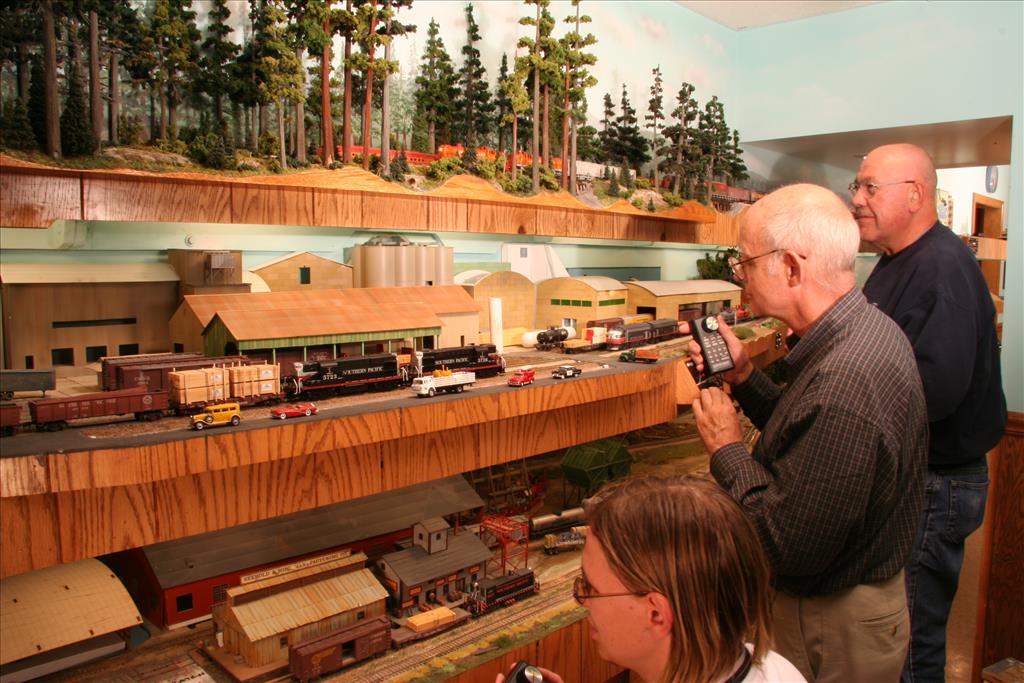
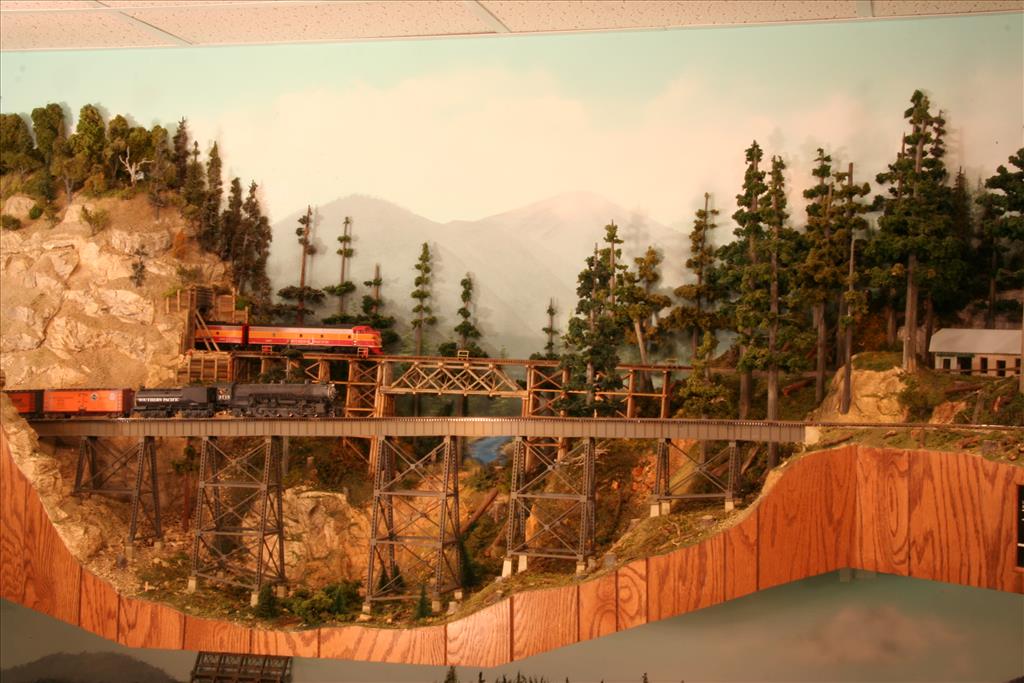
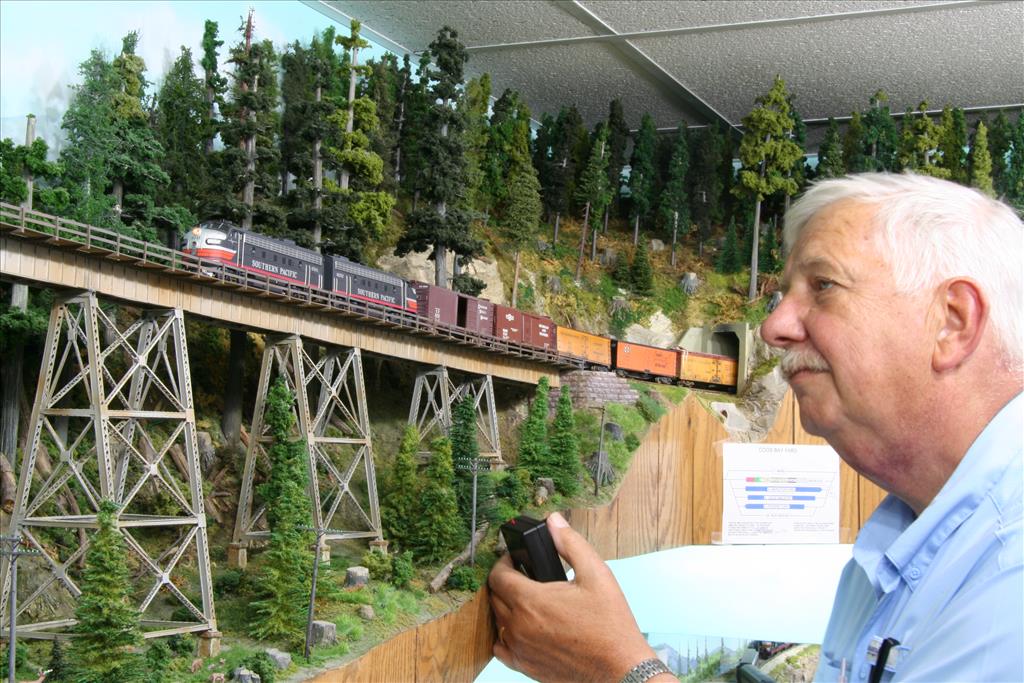
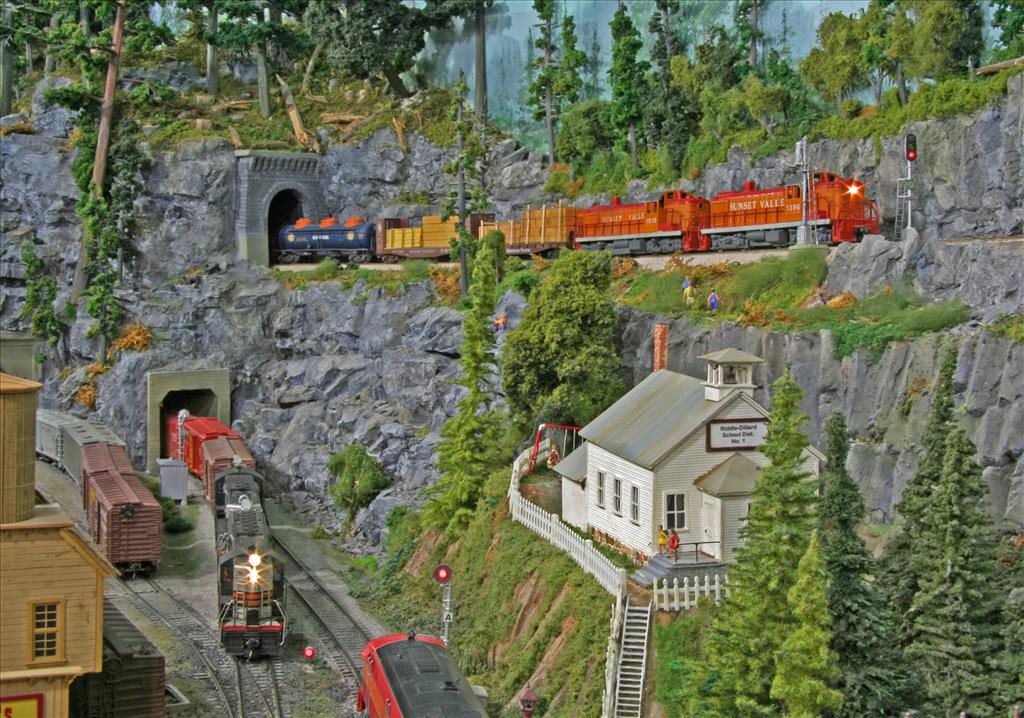
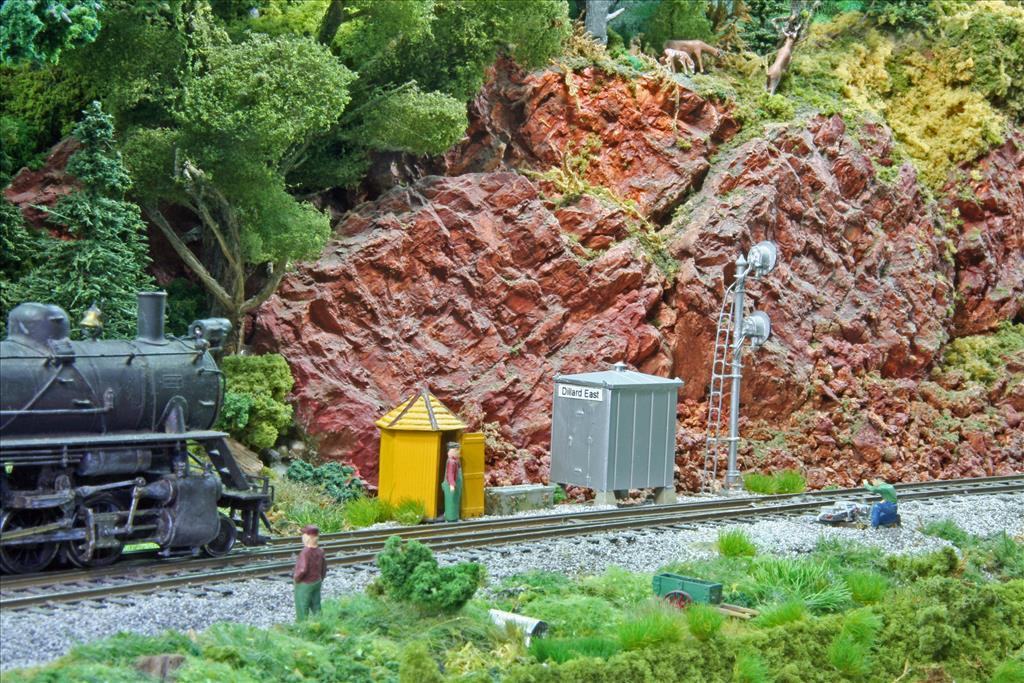
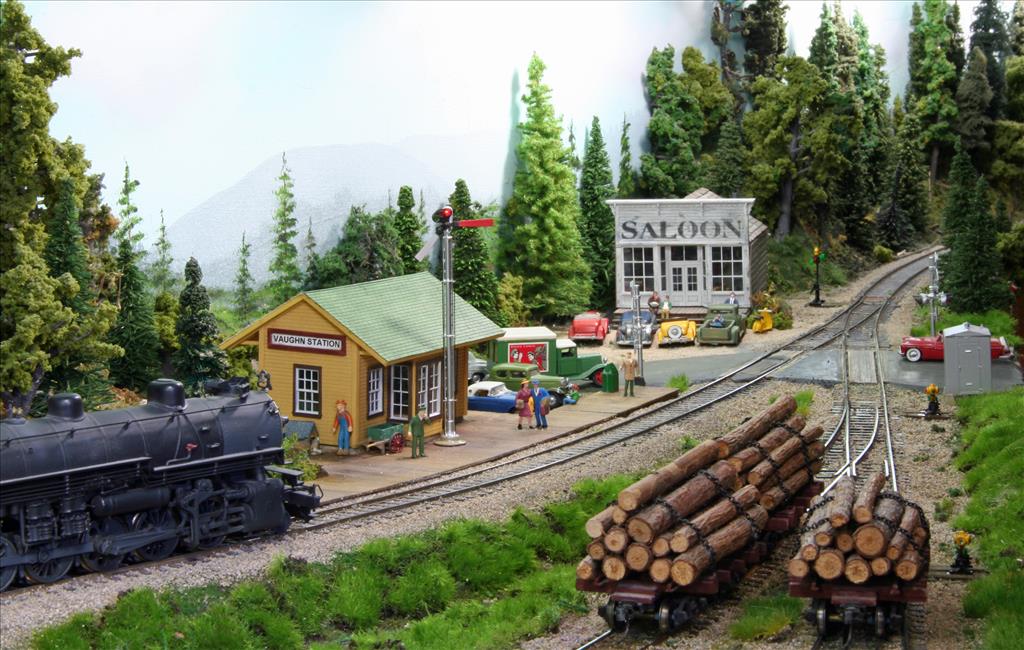
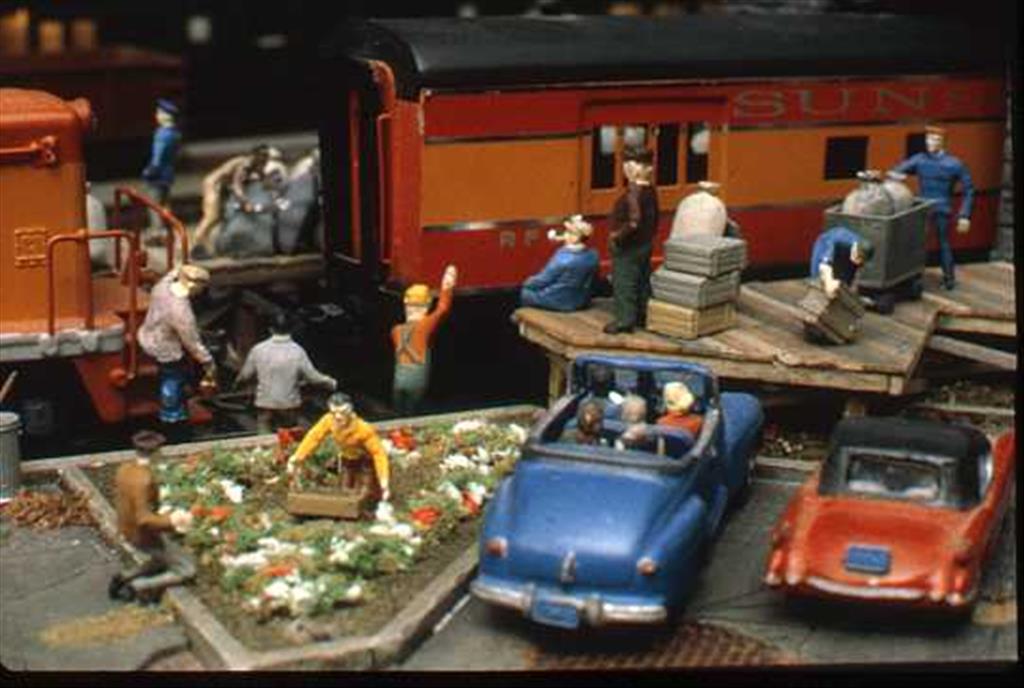
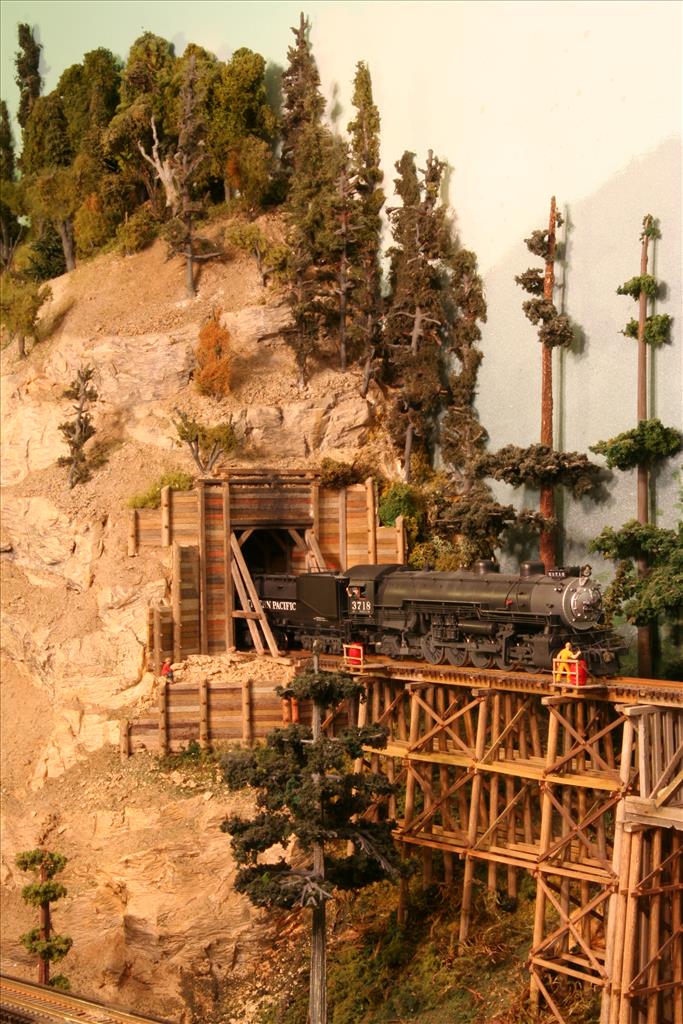
Scenery, set in 1955 all heavily prototypically based, captures abundant Pacific Northwest tall timber, extensive water, tall steel and wood trestles over canyons, rivers and creeks, sand dunes leading to the Pacific Ocean, big city and industrial buildings that dwarf the trains combined with breath-taking small towns and rural settings. Equally fascinating is watching long-trains struggle up the 3.6% grade crossing the Siskiyou Mountains separating Oregon from California. Everything is super-detailed, museum-quality including most buildings close to the fascia exhibiting extensive interior detail.
We hold regular all-day operating sessions twice a month. Early in each month there is a two-day (Friday-Saturday) session, and two weeks later there is a single day (Saturday) session. All sessions break for lunch. Check upcoming events for exact dates and times, and to sign up. The Friday-Saturday sessions are there for operators from long distances from western Michigan to make the trip worthwhile.
www.facebook.com/groups/sunsetvalleyhistoricalsociety
Guide for Guests and Crew Operating on the Sunset Valley.pdf
Upcoming Events
Saturday, April 18, 2026 9:00 AM - 4:00 PM - Sunset Valley Oregon System Operating Session
Saturday, May 16, 2026 9:00 AM - 4:00 PM - Sunset Valley Oregon System Operating Session
Saturday, June 20, 2026 9:00 AM - 4:00 PM - Sunset Valley Oregon System Operating Session
Saturday, October 17, 2026 9:00 AM - 4:00 PM - Sunset Valley Oregon System Operating Session
Saturday, November 21, 2026 9:00 AM - 4:00 PM - Sunset Valley Oregon System Operating Session
Saturday, December 5, 2026 9:00 AM - 4:00 PM - Sunset Valley Oregon System Operating Session
Saturday, December 19, 2026 9:00 AM - 4:00 PM - Sunset Valley Oregon System Operating Session
Layout Details
Bruce Chubb
LocationGrand Rapids, MI
ScaleHO
Layout Size80 ft x 33 ft
Mainline Size1400 ft
Era1955
Crew Complement12 - 25
CompletionTrack: 95%
Scenery: 90%
Electrical: 90%
NCE - Radio
Communications SystemWayside phones
Operating Session Details
CTC
Car ForwardingCar Cards/Waybills
Fast Clock2:1
Health and Safety
Basement - down stairs
ADA CompliantNo
PetsNone